I don’t usually make New Year’s Resolutions. They have a pretty bad track record, after all. Only about 9% are followed through each year, which doesn’t sound like great odds to me. Rather than chasing some dramatic transformation, I prefer to focus on making consistent progress. Small improvements repeated often enough tends to be far more effective than one ambitious promise made on January 1st and inevitably forgotten by February.
That being said, I did set out one New Year’s Resolution for 2025. As nerdy as it may sound coming from a computer science college student, I set a goal to code something new every day. Whether that meant adding a few pieces to an existing project or creating something entirely new off my ever-growing “to-code” list, the goal was to write something daily. And what better way to track that–and hold myself accountable–than with my contribution graph on GitHub.
For those unfamiliar, GitHub is the version control platform I use to store almost all of the code I write. One fun (and slightly addictive) feature is that it keeps track of the number of “contributions” you, well, contribute each day. Many things count as a contribution, but it’s essentially any addition, change, or improvement made to a code base. On your profile, this shows on a temporal (calendar) heat map—a 7-row, 52-column table of squares, each representing one day of the year and shaded green based on the number of contributions made that day.
In the context of my 2025 goal, my aim was to color the entire map green—and as you can see below, I did a pretty good job of keeping up with that!
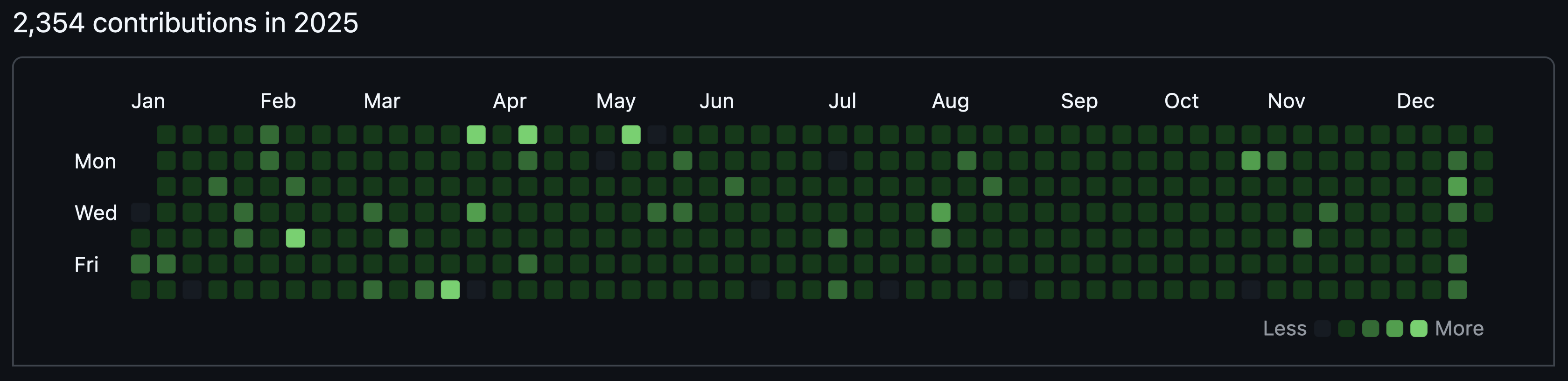
This year, I logged a total of 2,354 contributions—almost a 400% increase over the previous year! As the lighter green squares suggest, I had some intense days, like March 30 where I somehow managed 102 contributions in a single day working on a group project. In the end, I only missed 10 days the entire year, giving me an A+ score of 355/365 = 97.3%, which I’ll gladly take considering vacations, final exams, and going outside here and there make it difficult to code every day. My longest contribution streak was 93 days, which honestly surprised me more than anything.
Some other fun stats:
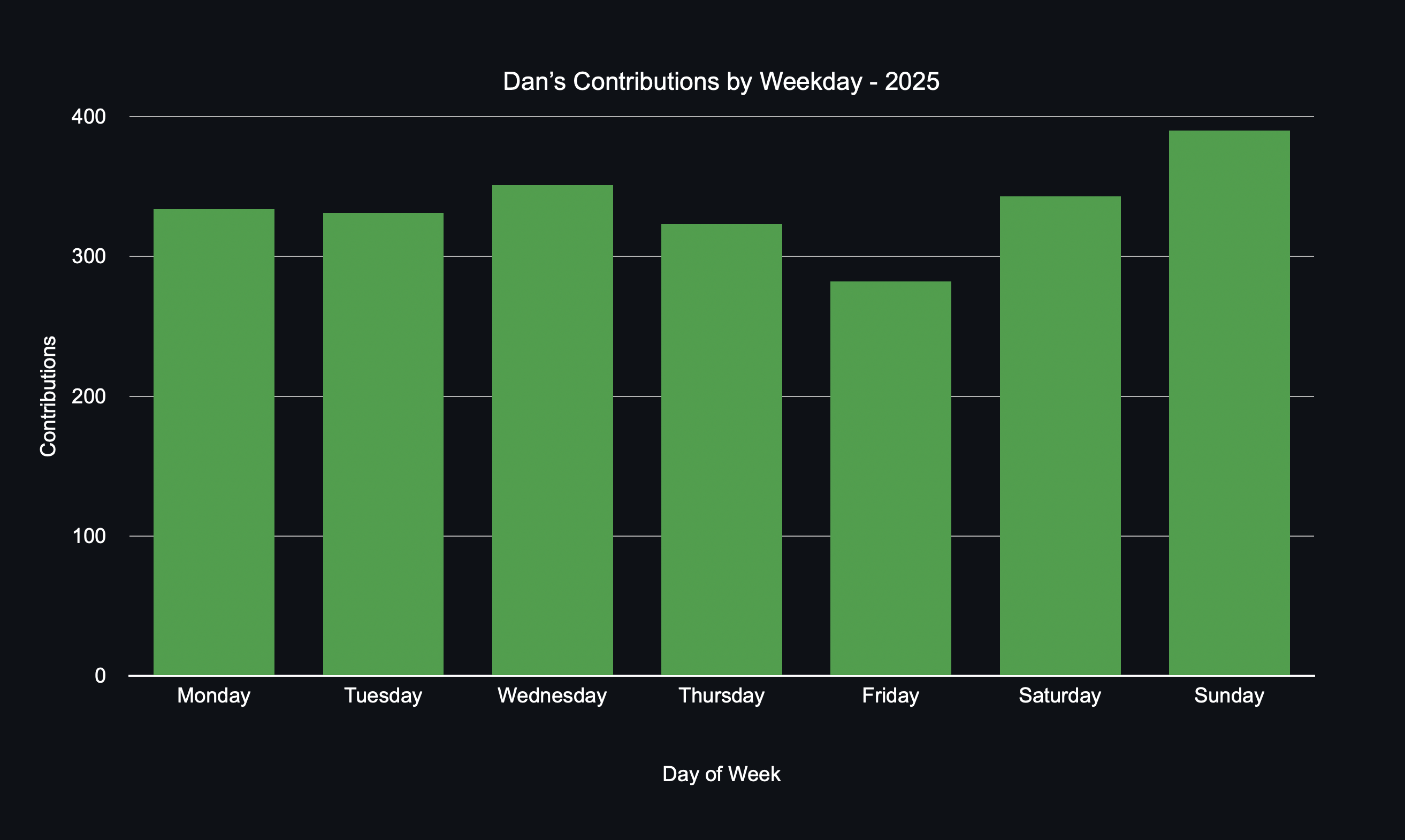
- My busiest day: Sunday with an average of 7 commits/Sunday
- Total stars gained: 23
- Top 1% of GitHub contributors (according to git-wrapped.com)
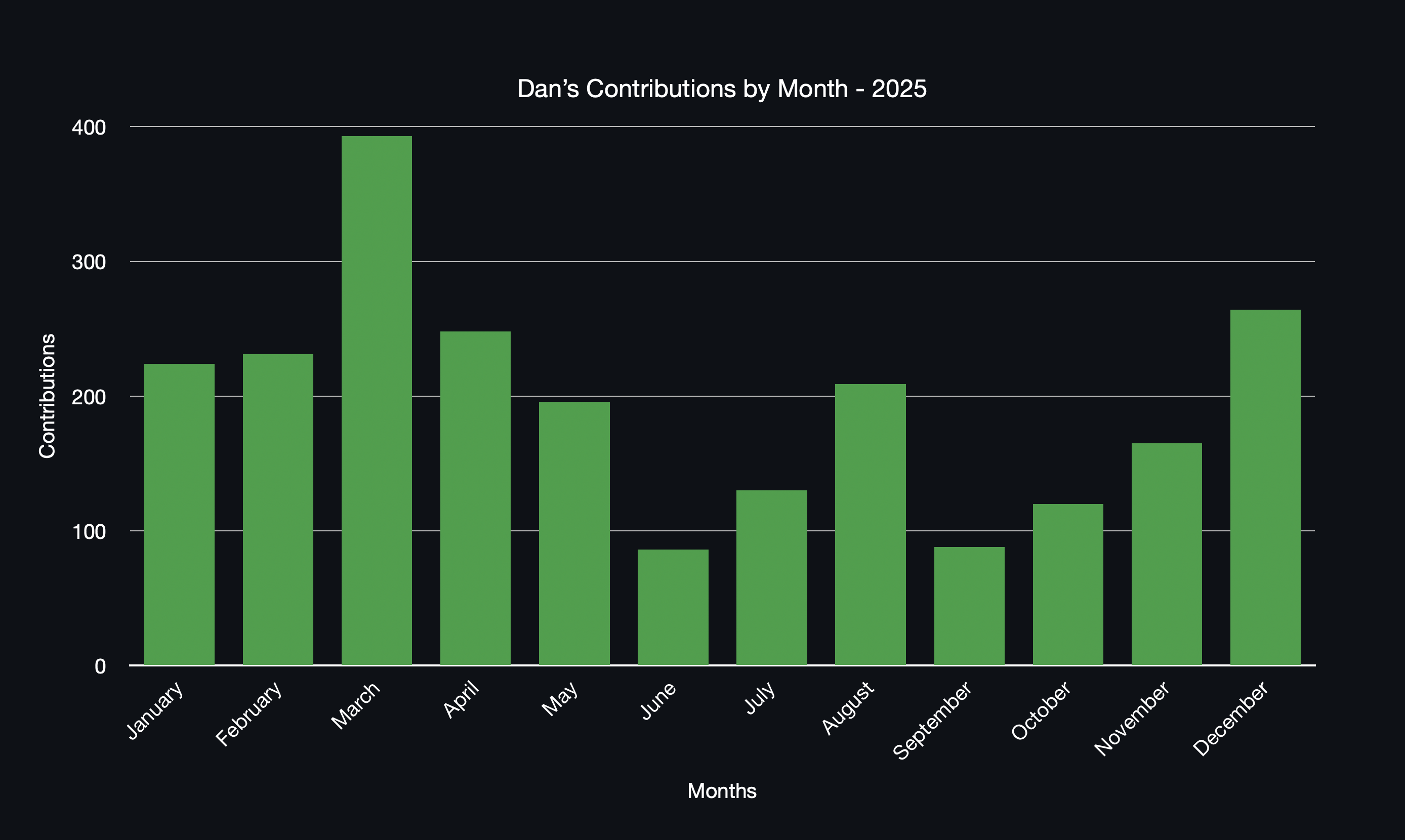
Below is a breakdown of my contributions by month. March is classically known as “hell month” thanks to mid-semester chaos, while June and September were noticeably calmer with the peak of summer underway and the start of a new school year.
And check out how things shook out by weekday, too:
Overall, I’m really proud of the progress I made this year. Coding something every day forced me to stay consistent, even on days where I was particularly busy, and really drove me to refine my skills. Looking ahead to 2026, I plan to keep up the momentum and continue coding regularly, so stay tuned to hear how it goes!